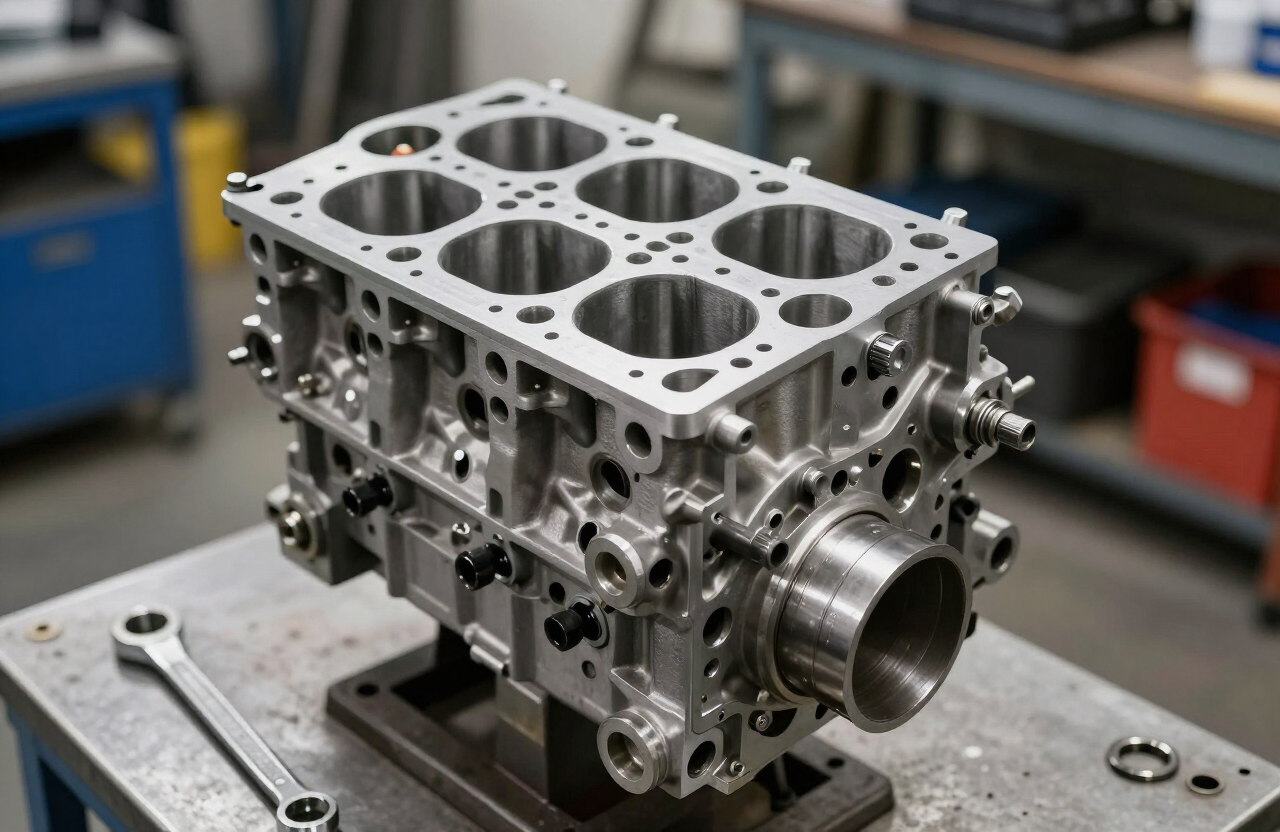
Engine work is priced by labour hours, parts and machining, and all three vary widely across the UK. These ranges reflect independent specialist pricing rather than franchised dealer rates, which typically run 30 to 60 per cent higher.
What drives the labour figure
Labour rates run from roughly £45 per hour in parts of the north and Wales to £120 and above in central London. On top of the rate sits the book time: a transverse V6 head gasket can be three times the hours of an inline four, and some engines require the subframe or the whole engine to come out for access.
Parts, machining and the hidden extras
Head bolts, injector seals, crankshaft bolts and many manifold fasteners are single-use. Machining — skimming, pressure testing, reboring, crank grinding — is charged separately and is often the difference between two quotes. Ask whether machining is included or provisional.
Where the money actually goes
On a typical £1,100 head gasket job, expect roughly £650 to £750 labour, £150 to £250 parts, and £150 to £250 machining and testing. Understanding that split makes it obvious why a £600 quote for the same job either excludes machining or plans to reuse the head untested.
Repair versus replace, in money terms
Once a repair quote passes about 60 per cent of the cost of a reconditioned unit supplied and fitted, replacement usually becomes the better value option — particularly if the vehicle is a mainstream model with good parts availability. Below that threshold, repairing the engine you know is generally the stronger choice.
When the car is worth less than the repair
This is common on older diesels. Before writing the vehicle off, get the replacement-engine fitted price as well as the repair price, and weigh both against the cost and risk of an unknown used car. A £2,000 engine in a car you have maintained is sometimes cheaper than a £6,000 unknown.

Written by
Adaeze Fowler CEng MIMechE
Technical reviewer, automotive engineer

Technically reviewed by
Gareth Mullen
Editor and IMI Master Technician (Level 4 Diagnostics)
This guidance is general. It does not replace inspection by a qualified technician on your vehicle. Read our editorial policy for how articles are researched, reviewed and updated.