When an engine fails badly enough to need opening up, you face a decision worth thousands of pounds. Rebuild the engine you have, or fit another one. There is no universal answer, but there is a reliable way to reach the right one for your vehicle.
Start with a strip and inspect, not a quote
Any workshop that quotes a rebuild price over the phone is guessing. The honest sequence is: remove the engine, strip it, measure the bores, crank journals and head, then price the work. Expect to pay for that inspection — typically £300 to £700 — and expect a photographic report in return.
If the inspection shows a serviceable block and head, a rebuild is usually the better engineering outcome because you keep a known unit with known history.
When a rebuild wins
- The failure is localised: one bearing, one piston, a dropped valve caught early.
- The block is undamaged and the bores can be honed or rebored within available oversizes.
- The vehicle is older, rare, or has an engine code with poor reconditioned availability.
- You need documented cause-of-failure evidence for an insurance or warranty claim.
When a replacement wins
- The block is cracked, the crank is beyond regrind, or coolant has been through the bores for a sustained period.
- The engine is a high-volume unit with plentiful reconditioned stock, so a tested unit costs less than the machining bill.
- Downtime is expensive — a van off the road for three weeks costs more than the price difference.
Understand what you are being quoted
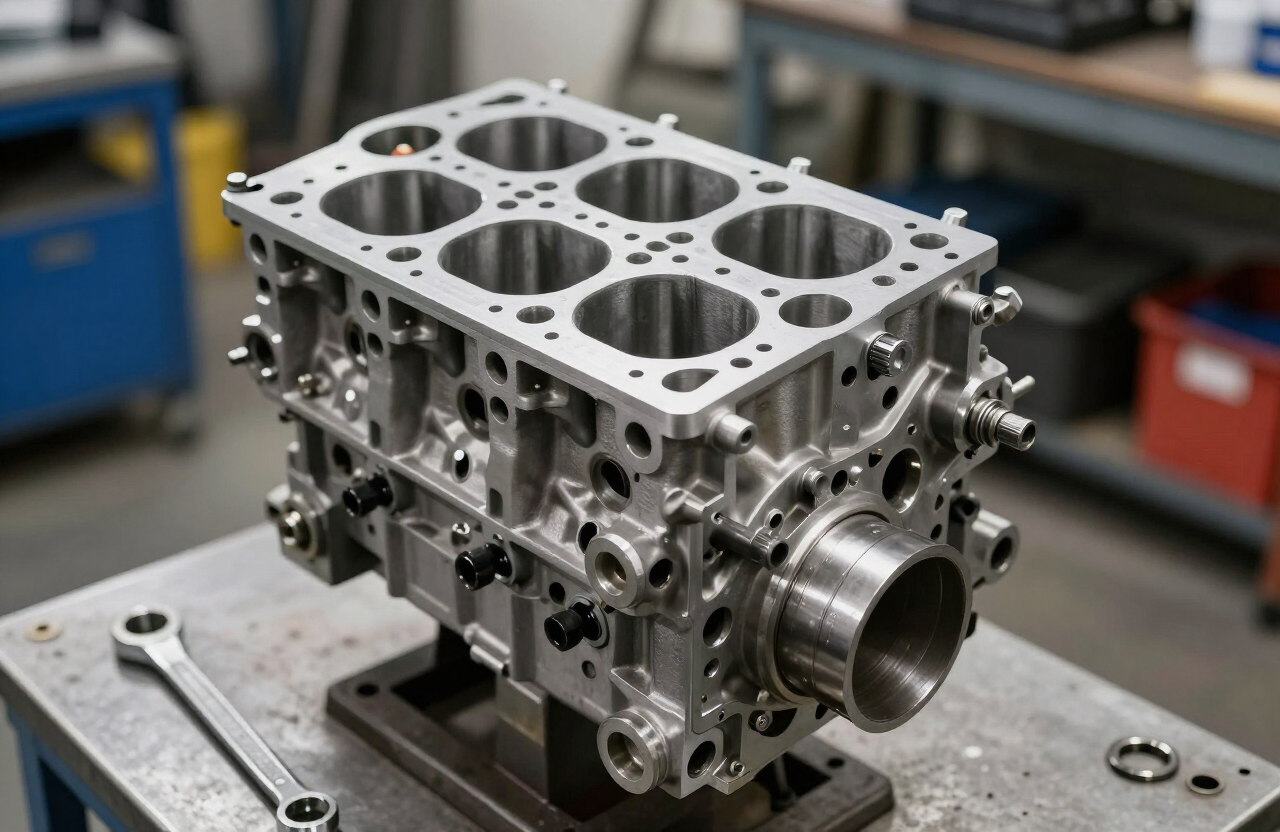
A short engine is a block, crank, pistons and rods. A long engine adds the cylinder head. A complete or "dressed" engine includes ancillaries. Two quotes that look £900 apart are often quoting different things, so ask which of the three you are getting and who transfers the injectors, turbo, manifolds and sensors.
Reconditioned and remanufactured are also not synonyms. Remanufacturing rebuilds to original tolerances with all wear items replaced as standard; reconditioning can mean replacing only what measured out of spec.
Ask the question that prevents repeat failure
Whichever route you take, the workshop must answer: what caused the original failure? A fresh engine fitted behind a blocked oil cooler, a failing viscous fan or a leaking injector will fail again, and that failure is rarely covered by warranty.

Written by
Gareth Mullen
Editor and IMI Master Technician (Level 4 Diagnostics)

Technically reviewed by
Adaeze Fowler CEng MIMechE
Technical reviewer, automotive engineer
This guidance is general. It does not replace inspection by a qualified technician on your vehicle. Read our editorial policy for how articles are researched, reviewed and updated.