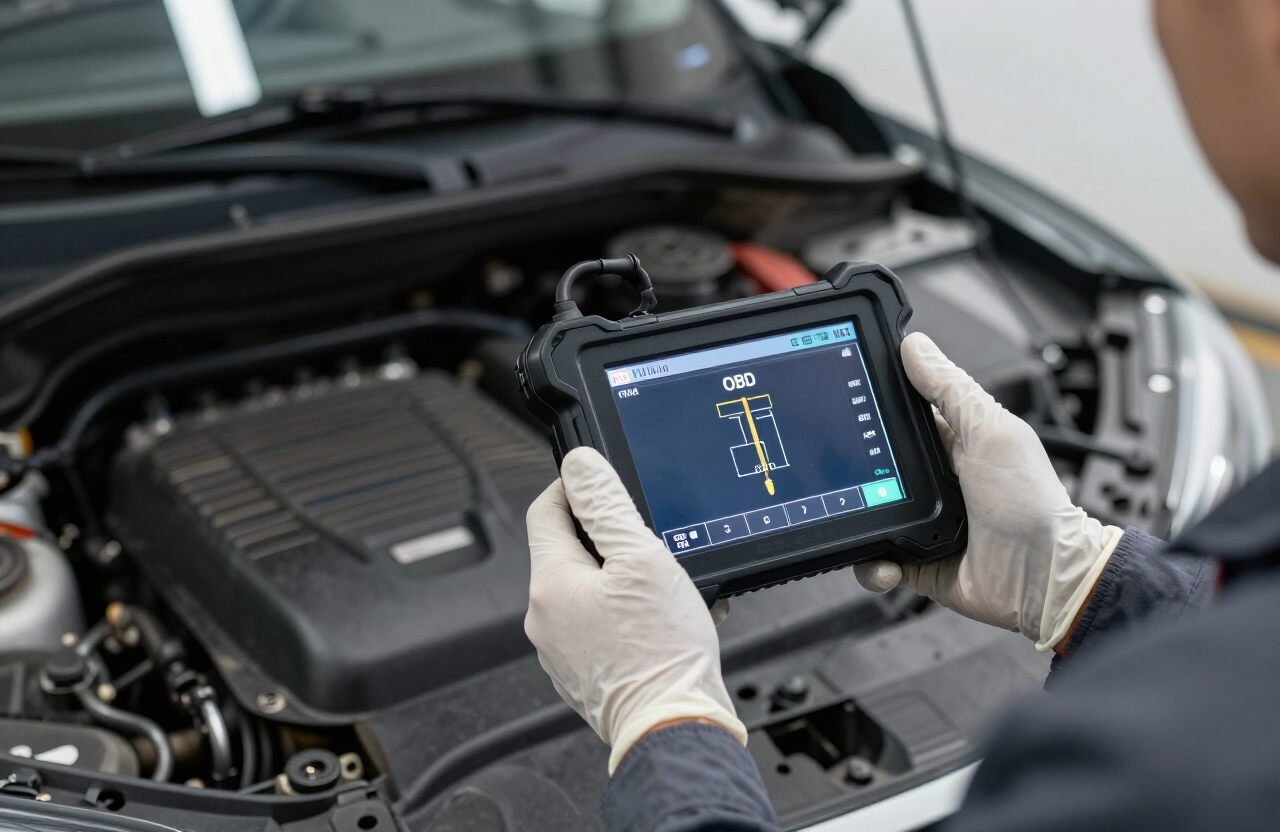
The amber engine symbol covers everything from a loose fuel cap to an active misfire destroying a catalytic converter. The behaviour of the light, not the light itself, tells you how urgent it is.
Steady amber
A fault has been stored. The car will usually drive normally. Have the codes read within a few days, and note anything unusual about how the car feels or sounds so the technician has context. Ignoring a steady light for months frequently converts a sensor fault into a catalyst or DPF failure.
Flashing amber
An active misfire. Unburnt fuel is entering the exhaust and the catalytic converter can be destroyed within minutes. Reduce load immediately, stop safely, switch off and arrange recovery.
Red lights are different
Red oil pressure and red coolant temperature warnings mean stop now. Neither is a "get home" light, and the damage from ignoring them takes minutes rather than miles.
What the common codes really mean
- P0300 series: misfire, random or cylinder-specific — ignition, fuel, compression or air leak.
- P0171 / P0174: running lean — vacuum leak, airflow sensor or fuel delivery.
- P0401 / P0402: EGR flow fault — often a carboned valve or cooler.
- P0016: crank and cam correlation — timing chain wear or a VVT solenoid.
- P2002 / P242F: DPF efficiency or ash accumulation.
Why clearing the code is not a repair
A code cleared without repair returns as soon as the ECU repeats its self-test. Worse, clearing the code discards the freeze frame data that would have made the fault easy to find. Leave the code in place until the workshop has read it.

Written by
Gareth Mullen
Editor and IMI Master Technician (Level 4 Diagnostics)

Technically reviewed by
Adaeze Fowler CEng MIMechE
Technical reviewer, automotive engineer
This guidance is general. It does not replace inspection by a qualified technician on your vehicle. Read our editorial policy for how articles are researched, reviewed and updated.